Fashion industry evolves as the COVID-19 pandemic forces a rethink
The pandemic has torn a multibillion-dollar bite out of the cloth of Europe's fashion industry, stopped rails shows and forced brands to show their designs digitally instead.
Now, amongst hopes of a return to nearly-normality by the year'southward end, the industry is asking what fashion will expect similar equally it dusts itself off and struggles to its well-heeled feet again.
Answers vary. Some think the Fashion Week format, in utilise since the 1940s, will be radically rethought. Others believe Asia will consolidate its huge gains in influence. Many see brands seeking greater sustainability to court a younger clientele.
"The touch of the pandemic will be unquestionably to increment the importance and influence of Asia on way," said Gildas Minvielle, economist at the Institut Francais de la Mode in Paris.
"Luxury in Europe has already rebounded merely it's only because it'south globalised, only because of Asian buyers," Minvielle said. "They spent on European brands."
Asian buyers are still considered a largely untapped market, yet their wealth has recently tipped over that of Westerners. China, in particular, was already considered the worldwide engine of growth in the luxury industry before the pandemic. Its quicker containment of the virus will exit information technology in an even stronger position.
"In the adjacent 50 years money volition come from the East as it has been (coming) in the final fifty years from the West," said Long Nguyen, chief way critic of The Impression.
This could run into a designer aesthetic that panders more to Chinese tastes.
Some other tendency that's been strengthened during the pandemic is the decision to forgo the frenetic pace of runway agenda shows.
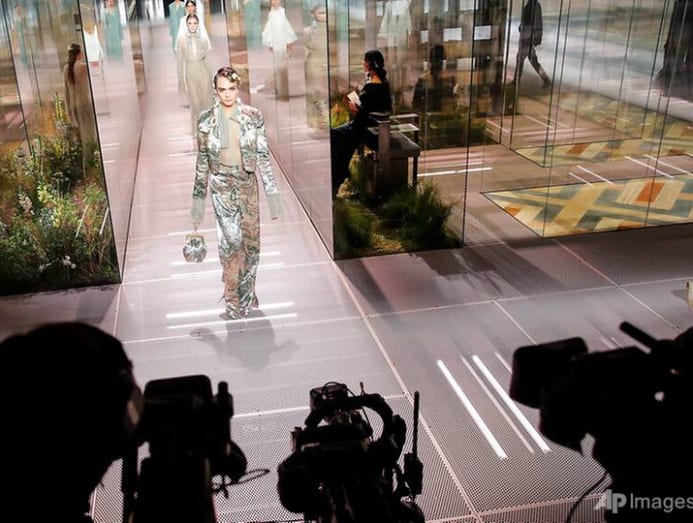
As the virus tore across the world from E to West, these morphed overnight from a live, in-person, sensory experience to a pre-taped digital display released online. Many predicted devastation for the manufacture, only houses have proved surprisingly resilient. That's because the organisation was already overdue a shift.
Since the advent of social media, brands take go much less reliant on traditional advertising outlets such as fashion magazines. Now, they create their own online channels, circumventing the glossies, to get their designs out.
"Each make is a media entity unto itself," Nguyen said, calling the way the industry operates "obsolete".
Moreover, as buyers themselves movement online, houses have necessarily become much less dependent on traditional sales outlets such as department stores.
Some houses accept done better than expected with the new digital format. Smaller brands, in particular, accept welcomed the break from staging rails shows that can be astronomically expensive – for relatively little return.
The virus saw many brands, including Balenciaga, Alexander McQueen and Bottega Veneta of French luxury giant Kering, tearing upwards the traditional calendar to show their new collections when it suits them – both creatively and financially. Saint Laurent started the trend concluding year, cartoon headlines for quitting Paris Fashion Calendar week to "take control of its pace".
The advantage for these brands is to set dates on their own terms, with collections that don't compete with others for attending at the same time. Yet many cornball critics, buyers and consumers fence that cipher can replace the physical runway experience.
"Brands accept been deciding more and more when their optimal time to bear witness is... They desire to control their business more and that is their right," Pascal Morand, Paris fashion federation Executive President.
"But this is non the cease to Style Calendar week. No thing what people say they are all awaiting a return to the runway and to come back to the physical experience."
Stella McCartney, who unveiled her fall collection off-schedule last month, said that the industry has been seriously questioning the relevance of seasons "even earlier COVID", as climate alter has sadly highlighted how absurd information technology is.
"There was a moment at the showtime of lockdown – in the sky in that location were no airplanes, y'all could hear birds," McCartney said. "Everyone was talking nearly nature reclaiming its rightful place," she added, expressing frustration with the manufacture's lifestyle that requires thousands of kilometers of travel per year.
McCartney said that across the manufacture at present in that location is a sense that brands must encompass sustainability "in lodge to survive", especially to attract the young, more environmentally witting consumer.
One instance of such eco-thinking is in reducing waste in collections. Luxury giants take been criticised in the past for called-for unused or unsold luxury goods.
And McCartney too doesn't seem to remember that this will exist the end of the runway show.
"I don't retrieve we will throw away where we are today and I don't think we'll dismiss where we were yesterday," she said. "It took me a while, but I miss the energy at the end of the show, the engagement with my customs, I miss seeing apparel in real life and moving, expressions of the models, the sound. That is the art."
(Source: AP)
Source: https://cnalifestyle.channelnewsasia.com/style/fashion-industry-evolves-as-covid-19-pandemic-forces-rethink-177911

Post a Comment for "Fashion industry evolves as the COVID-19 pandemic forces a rethink"